This charming photograph captures a peaceful suburban neighborhood during the golden hour, with warm sunlight casting a gentle glow across the landscape. In the foreground, a wide expanse of lush green lawn stretches toward a row of neat brick houses with dark tiled roofs and white-framed windows. On the left, a dense green hedge runs alongside the property, while a large leafy tree stands prominently on the right side of the frame. In the background, you can see outdoor furniture, several colorful recycling bins, a white van parked near the driveway, and another vehicle partially visible. The overall scene feels calm and everyday — the kind of quiet residential area where families and pets enjoy daily life.
Yet, something is not quite as ordinary as it seems. Tucked away within this familiar setting is a hidden surprise that will test your observation skills. Your challenge is to carefully scan every detail of the image and Find Hidden Dog in the Picture. At first glance, everything appears normal, but a furry friend is cleverly concealed, blending into the surroundings. The suspense grows as you examine the hedges, lawn, and house front — can you locate the dog before the answer is revealed?
Find Hidden Dog in the Picture
This engaging visual puzzle invites you to look beyond the obvious and hunt for subtle clues. The suburban backyard and garden setting provides excellent natural camouflage, especially with the dense greenery and shadows playing across the scene. Find Hidden Dog in the Picture requires patience and a sharp eye, as many people overlook the dog on their first few attempts. Focus on unusual shapes, colors, or textures that stand out from the grass, bushes, and architectural lines.
Dogs are known for their playful and sometimes mischievous behavior, often finding cozy spots to rest or observe their territory. In this image, the environment — with its well-maintained hedges and open lawn — creates the perfect hiding spot for a curious pet. Find Hidden Dog in the Picture is not only a fun brain teaser but also a reminder of how animals use their surroundings to stay comfortable and secure. Whether it’s a family dog keeping watch over the neighborhood or simply enjoying a quiet moment, spotting it adds a delightful twist to this ordinary-looking photo.
Such “spot the hidden animal” challenges have become popular on social media and wildlife blogs because they sharpen focus and bring joy to viewers of all ages. This particular scene highlights the close bond between humans and pets in everyday residential spaces. As you search, notice how the light and shadows interact with the green foliage, making certain details tricky to distinguish at first.
Find Hidden Dog in the Picture also encourages mindfulness and appreciation for the small wonders in our daily environments. Pets like dogs often become part of the scenery in familiar places, their presence comforting yet sometimes easy to miss when we’re not paying close attention.
Answer of Find Hidden Dog in the Picture
The dog is hiding in the green fence in front of house. Only head is visible.
Once you spot it, the dog’s head becomes clearly noticeable, peeking out from the dense green hedge (fence) directly in front of the house. Its fur and features blend almost perfectly with the leaves and shadows, demonstrating impressive natural camouflage in a domestic setting. This clever hiding spot allows the dog to observe the surroundings while remaining mostly concealed.
Find Hidden Dog in the Picture turns a simple neighborhood photo into an entertaining discovery. It showcases how even in suburban areas, animals find creative ways to interact with their environment. This type of puzzle is perfect for families, pet lovers, and anyone looking to boost their attention to detail.
Beyond the fun, Find Hidden Dog in the Picture reminds us of the importance of responsible pet ownership and awareness in shared living spaces. Dogs bring joy, security, and companionship to homes, but they also rely on safe environments to explore and rest. Images like this foster greater appreciation for the animals that share our world, whether in the wild or right next door.
This beautifully lit suburban photograph combines everyday charm with an exciting search challenge. It’s ideal for sharing on blogs, social media, or community forums. Next time you walk through your neighborhood or view similar images, remember to look a little closer — you never know what (or who) might be hiding in plain sight.
This vibrant photograph transports viewers into a dense, thriving wetland teeming with life. The scene is dominated by rich green vegetation, including large, heart-shaped leaves of taro plants (often called elephant ears) that rise prominently from the water. The surface of the small pond or swamp is almost entirely covered in a thick layer of bright green duckweed and algae, creating a textured carpet that blends seamlessly with surrounding grasses and slender reeds. Sunlight filters through the foliage, highlighting the lush, natural environment. At first glance, it looks like a peaceful, undisturbed slice of nature — the kind of place where birds, insects, and small creatures thrive in harmony.
But hidden within this verdant paradise is a stealthy resident that could send a shiver down your spine. The calm appearance masks a thrilling challenge for anyone with sharp eyes and patience. Your task is to carefully examine every inch of this image and Find Hidden Alligator in the Picture. Is there really something lurking among the plants and green scum? The suspense builds as you scan the leaves, water, and shadows, wondering if nature’s master of camouflage is watching you right back.
Find Hidden Alligator in the Picture
This visual puzzle demands focus and attention to detail. The wetland environment shown here provides the perfect backdrop for concealment, with its overlapping leaves, dense greenery, and reflective water surface. Many people look at the image several times before realizing there’s more than meets the eye. The task is straightforward yet exciting: Find Hidden Alligator in the Picture by searching for any unusual shape, texture, or shadow that doesn’t quite belong among the plants.
Wetlands like the one captured in this photo are biodiversity hotspots, common in regions such as Florida, Louisiana, and parts of India and Southeast Asia. These areas support a wide variety of flora and fauna, including large predatory reptiles. Alligators, in particular, are experts at blending into their surroundings. Their dark, textured skin and ability to remain almost completely still allow them to disappear against muddy banks, vegetation, and algae-covered water. Find Hidden Alligator in the Picture is not only an entertaining game but also an educational glimpse into how these ancient survivors thrive in challenging habitats.
The image beautifully illustrates the delicate balance of these ecosystems. Dense aquatic plants provide cover for young wildlife while also serving as nurseries for fish and insects. However, this same density makes spotting hidden animals particularly difficult. As you hunt for clues, notice how the large green leaves create natural shadows and patterns that can easily disguise a small reptile. This type of camouflage, known as crypsis, has helped alligators persist for millions of years as apex predators.
Find Hidden Alligator in the Picture also raises awareness about human-wildlife interactions. In many suburban and rural areas, retention ponds and natural wetlands sit close to homes and trails. Warning signs are common in such places, reminding visitors to stay alert. Activities like this puzzle help train our observation skills, making us more aware of potential dangers while fostering greater appreciation for nature’s ingenuity.
Answer of Find Hidden Alligator in the Picture
The baby alligator is at the dead center.
Once you spot it, the baby alligator becomes unmistakable — positioned perfectly at the dead center of the image, its small body and head blending with the green duckweed and plant stems. Its dark form and subtle outline merge with the surrounding vegetation and water, making it a brilliant example of natural camouflage. The young alligator’s size and positioning among the leaves demonstrate how even juveniles master the art of concealment for protection against larger predators.
Find Hidden Alligator in the Picture challenges viewers to move beyond casual observation and engage deeply with the natural world. Baby alligators, though small, are already skilled hunters and hiders. They feed on insects, small fish, and amphibians while staying hidden from birds, raccoons, and other threats. This image captures the essence of wetland survival in one frame.
Beyond the fun of spotting the reptile, Find Hidden Alligator in the Picture carries a deeper message about conservation. Wetlands face ongoing threats from development, pollution, and climate change. Protecting these habitats ensures the survival of species like alligators and maintains ecological balance. Educational puzzles like this one are excellent tools for engaging the public in wildlife appreciation and environmental stewardship.
Whether shared on social media, nature blogs, or educational platforms, images like this spark curiosity and conversation. They remind us that beauty and danger often coexist in the wild. Next time you explore a pond, swamp, or even view nature photography, take a moment to look closer. You might just Find Hidden Alligator in the Picture — or another hidden wonder waiting to be discovered.
This captivating wetland scene combines aesthetic appeal with an engaging challenge, making it ideal for wildlife enthusiasts, photographers, families, and educators alike. Keep your eyes peeled, respect nature’s boundaries, and enjoy the thrill of uncovering its secrets.
This stunning photograph captures a tranquil waterfront landscape that looks like the perfect spot for a peaceful afternoon stroll. The calm, glassy blue water dominates the center of the image, perfectly reflecting the surrounding trees, palm fronds, and clear blue sky above. A lush green grassy bank lines the foreground, leading down to dark rocks along the water’s edge. On the right side, a prominent wooden post holds a bright yellow warning sign that reads “CAUTION BEWARE OF ALLIGATOR,” adding an element of caution to the otherwise idyllic setting. In the background, you can see a mix of tall trees, palm trees, a fence, and residential-style landscaping under bright sunlight. Everything appears serene and inviting — but is it really safe?
Beneath this beautiful surface lies a hidden challenge. Nature has a way of concealing its most formidable inhabitants in plain sight. Your mission is to carefully examine every detail of this image and Find Hidden Alligator in the Picture. At first glance, the scene feels completely harmless, but a dangerous predator is lurking somewhere in the water. Will you be able to spot it before it’s too late?
Find Hidden Alligator in the Picture
This visual puzzle tests your observation skills and patience. The task is to scan the entire photograph — from the reflective water and tree reflections to the grassy banks and rocky edges. The environment provides ideal camouflage for an alligator, with shadows, ripples, and natural debris helping it blend seamlessly into the surroundings. Many viewers scan the image multiple times without success, missing the subtle clues that reveal the hidden reptile.
Find Hidden Alligator in the Picture is more than just a game — it highlights the remarkable survival strategies of these ancient creatures. Alligators are masters of stealth, often remaining almost motionless with only their eyes and snout visible above the water. This particular image, taken in what appears to be a suburban or park-like wetland area common in Florida and other southern regions, reminds us that these powerful reptiles can thrive even near human habitats.
The warning sign in the photo serves as a real-world alert, emphasizing that these waters are home to alligators. Such signs are common in areas where humans and wildlife share space. Find Hidden Alligator in the Picture encourages you to look beyond the obvious beauty and develop a keener eye for detail. Pay close attention to unusual shapes, shadows, and disturbances on the water’s surface that don’t match the peaceful reflections.
Wetlands and ponds like the one shown here play a vital ecological role. They support diverse wildlife, help control flooding, and maintain water quality. However, they also create perfect conditions for apex predators. Alligators help balance ecosystems by controlling populations of fish, birds, and small mammals. Learning to recognize their presence through activities like Find Hidden Alligator in the Picture builds greater respect for these animals and promotes safer coexistence with nature.
Answer of Find Hidden Alligator in the Picture
In the water little left from the center. The shadow of pointed tree where ends there you will see head of Alligator.
Once spotted, the alligator’s head becomes clearly visible — a dark, textured shape breaking the water’s surface. Its strategic position near the reflection of a pointed tree allows it to remain nearly invisible to the untrained eye. This discovery transforms the peaceful scene into an exciting wildlife encounter and proves just how effective natural camouflage can be.
Find Hidden Alligator in the Picture challenges not only your eyesight but also your understanding of animal behavior. These reptiles can stay submerged for long periods, using their positioning to ambush prey while avoiding detection. The presence of the caution sign in the foreground reinforces the reality that this beautiful location is indeed alligator territory.
This type of interactive wildlife puzzle has become increasingly popular on social media and nature websites. It entertains viewers while educating them about the importance of respecting wildlife habitats. Similar images from Florida’s lakes, swamps, and retention ponds often spark lively discussions as people share their spotting success (or failure).
Beyond the fun factor, Find Hidden Alligator in the Picture carries an important message about conservation and safety. As urban development expands into natural areas, human-alligator encounters are becoming more common. Respecting warning signs, keeping a safe distance from water edges, and staying alert can prevent dangerous situations. Preserving wetland habitats ensures these magnificent creatures continue to thrive while protecting the biodiversity that supports entire ecosystems.
Whether you’re a wildlife enthusiast, photographer, or simply someone who enjoys brain-teasing images, this photograph offers both beauty and excitement. Next time you visit a pond, lake, or wetland area — or browse through nature photos — remember to look carefully. The wild is full of surprises, and mastering the skill of spotting hidden animals deepens your connection with the natural world.
Find Hidden Alligator in the Picture is the perfect reminder that danger and beauty often coexist in nature. Keep your eyes sharp, stay respectful of wildlife, and enjoy the thrill of discovery.
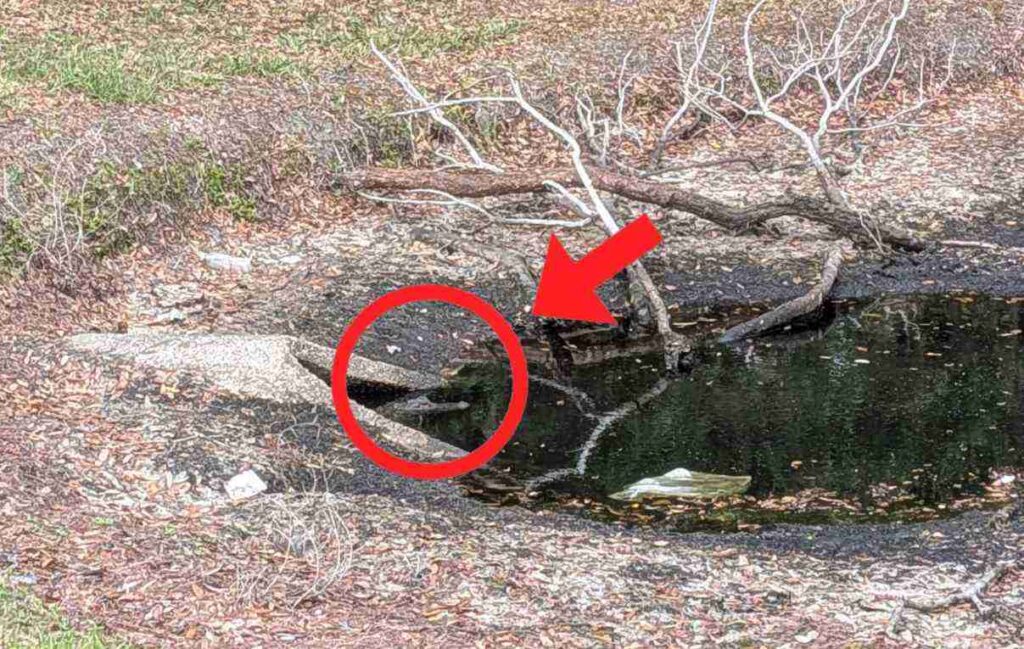
This captivating wildlife photograph presents a seemingly peaceful shoreline where land meets water in a natural, untamed setting. Dense green bushes and shrubs form a thick backdrop, while the foreground features dry brown leaves, patches of grass, and a fallen, pale white tree with twisted branches lying across the muddy bank. The dark, reflective water occupies the lower portion of the frame, creating a mirror-like surface dotted with floating debris. A concrete pipe-like structure is visible on the left side near the water’s edge, adding an element of human influence to this otherwise wild landscape.
At first glance, everything appears calm and ordinary — just another quiet moment in a coastal or wetland habitat. But there’s more to this image than meets the eye. Something dangerous is lurking here, perfectly camouflaged against its surroundings. Your challenge is simple yet thrilling: Find Hidden Crocodile in the Picture. Can you spot the stealthy predator before it spots you?
Find Hidden Crocodile in the Picture
The task requires careful observation and patience. Scan every detail — from the tangled branches of the fallen tree to the murky water and the textured bank. The environment provides excellent cover with its mix of shadows, earthy tones, and natural debris. Mangrove and wetland areas like this are known habitats for crocodiles, where they use their incredible camouflage skills to remain undetected while waiting for prey.
This image perfectly demonstrates nature’s mastery of disguise. The crocodile blends seamlessly with the dark water, mud, and shoreline elements. Many people miss it on their first few attempts, passing over the subtle shapes that don’t quite belong. Find Hidden Crocodile in the Picture and you’ll appreciate how these ancient reptiles have survived for millions of years through such effective stealth tactics.
Wetlands and riverbanks are vital ecosystems that support diverse wildlife. They act as nurseries for fish, feeding grounds for birds, and hunting territories for apex predators like crocodiles. In regions across India, Australia, and Southeast Asia, these habitats are essential yet increasingly threatened by human activity. Spotting wildlife in such photos not only entertains but also highlights the importance of conservation efforts to protect these fragile environments.
Answer: Find Hidden Crocodile in the Picture
The crocodile is at the left side of water where a concrete pipe like structure is made. A head is visible.
Once you locate it, the crocodile’s head emerges clearly from the camouflage — its eyes, snout, and upper head just breaking the water’s surface near the concrete structure on the left. The rest of its body remains submerged, making it a textbook example of ambush hunting. This discovery turns an ordinary-looking photo into an exciting wildlife moment.
Find Hidden Crocodile in the Picture challenges not just your vision but your understanding of animal behavior. These reptiles can stay almost completely motionless, with only their nostrils and eyes above water. The concrete pipe-like structure provides additional context, showing how wildlife adapts even near human-made elements.
This type of visual puzzle is popular among nature lovers, photographers, and educators because it sharpens focus and awareness. Similar images from the Sundarbans, Florida Everglades, or Australian wetlands often go viral as people test their spotting skills.
Beyond entertainment, Find Hidden Crocodile in the Picture encourages respect for these powerful creatures and the ecosystems they inhabit. Preserving wetlands ensures the survival of crocodiles and countless other species that depend on these biodiverse zones.
Next time you’re near a water body or viewing nature photos, remember to look twice. The wild is full of hidden surprises, and mastering the art of observation can reveal wonders right in front of us.
You won’t wonder if you say that you came across a picture on social media of a bird eating a crocodile.
Definitely, AI is almost destroying social media with fake pictures. You won’t believe even the original pictures are real after the implementation of AI everywhere.
But few pictures are real. You might be thinking that a bird cannot eat a crocodile, but it is true that some birds can eat crocodiles.
Certain things are applied here. If you compare an adult or any large or medium-sized crocodile, then it is not possible because of the size difference.
We know that crocodiles are apex predators and they hunt everyone but don’t get hunted by any predator. Even big cats like lions and tigers are afraid of crocodiles, especially in the water.
So this is not an easy task for birds. There are certain circumstances where birds can eat crocodiles.
99% or we can say 100% of the cases, the birds which eat crocodiles target very small or baby crocodiles.
Birds That Eat Crocodile
Not all birds can do this. Only massive bird species are capable of hunting and eating crocodiles.
1. Shoebill – The Most Famous Crocodile Hunter
Bob Owen / wikipedia
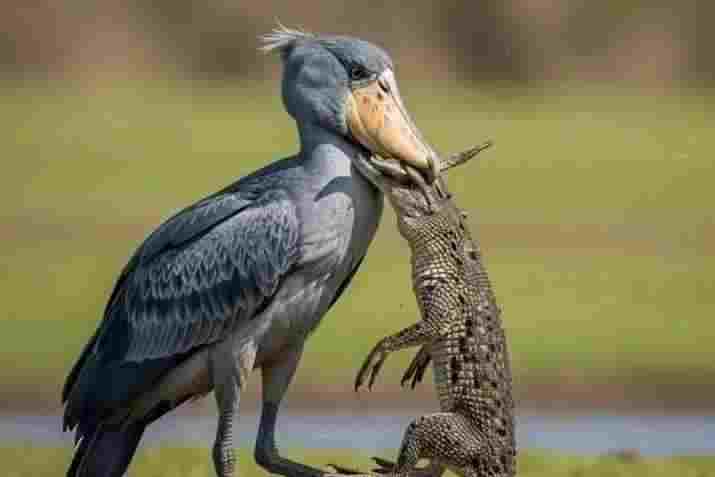
The bird first in this list is the Shoebill. This is the most common bird known for eating baby crocodiles. This is possible because of its massive size. As its name suggests, it has a large bill that makes it possible to hunt baby crocodiles.
This bird is native to the center of Africa and can feed on fish, amphibians, insects, snakes, and sometimes small crocodiles. These birds can grow up to 5 feet. That’s why some people call this a human-sized bird.
Many times photographers and wildlife lovers have captured pictures of Shoebills hunting and eating small crocodiles. Many scientists and researchers have also confirmed that Shoebill birds can really eat and hunt small crocodiles.
2. Great Blue Heron
Img – Dr. Scott W. Martin 2015
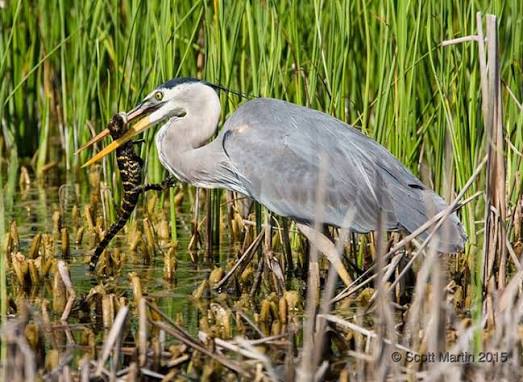
The second bird is the Great Blue Heron. Some people think that the Great Blue Heron and Shoebill are the same, but they both are different. The Great Blue Heron has a long and sharp beak which makes it easier for hunting amphibians, fish, reptiles including crocodiles and alligators.
Many times while searching for food, the Great Blue Heron witnesses small alligators and crocodiles and doesn’t miss the chance to hunt them. The Great Blue Heron hunts small crocodiles and alligators and eats them.
3. Marabou Stork
The third bird is the Marabou Stork, a strong bird also native to Africa. Because of its massive size and its appearance, when you see its face you will feel like it’s from a horror movie. This bird also looks like it is from the Jurassic period.
This bird is massive. Due to their large legs they can catch all small amphibians, fish, and sometimes get the chance to hunt baby crocodiles and alligators. They don’t miss a hunt and even eat the eggs of alligators and crocodiles.
You can recognize this bird by its pinkish outgrowth on the neck. The head looks almost bald but there could be brownish and black colored head. Its massive size helps to identify this bird.
4. African Fish Eagle (Haliaeetus vocifer)
The eagle is one of the most well-known predators among birds. Eagles hunt a variety of species, including birds, amphibians, reptiles, snakes, lizards, fish, and even small mammals. Many times, small rabbits and other animals become prey to these apex predators.
Eagles are known for their incredible eyesight. They can spot prey from very high above the ground, sometimes from more than 100 feet in the air. The African Fish Eagle is mainly found in the sub-Saharan regions of Africa. As its name suggests, it mostly hunts fish and generally lives near lakes, rivers, and other freshwater bodies.
This eagle flies high above the water and carefully watches for fish. With its excellent vision, it can suddenly dive at high speed and catch prey with its sharp talons. In rare cases, small crocodiles and alligator hatchlings may also become targets. Once the African Fish Eagle locks onto its prey, there is very little chance of escape.
Female African Fish Eagles are generally larger than males, showing sexual dimorphism in the species.
The stork is well known for living around aquatic environments, which is why it is commonly seen near ponds, rivers, wetlands, and shallow water areas. Unlike eagles, storks usually do not attack from the sky. Instead, they slowly walk through shallow water and grassy wetlands while searching for food.
While walking through these areas, they feed on snails, crustaceans, amphibians, insects, fish, and other small aquatic creatures. Sometimes, baby crocodiles and alligator hatchlings hiding in shallow water or grassy areas can also become prey to this bird.
The Black-necked Stork is a powerful bird with a long sharp beak, making it capable of catching and swallowing small reptiles. Since these birds spend most of their time near water bodies, the chances of encountering baby crocodiles are much higher.
6. Black Kite (Milvus migrans)
Many people would never expect the Black Kite to appear on this list. It is generally known for hunting small birds, rats, reptiles, and insects. However, in rare cases, Black Kites have also been seen attacking baby crocodiles and alligator hatchlings.
This behavior is mostly observed in regions such as Australia, where the hunting behavior of Black Kites is considered highly advanced. Black Kites are famous for their speed, agility, and sharp hunting instincts. One of their most interesting behaviors is known as “firehawk” behavior, where they are believed to spread fire by carrying burning sticks to flush out prey.
These birds fly high in the sky while searching for food. Once they spot prey, they suddenly dive at high speed and attack. Hatchling crocodiles and juvenile alligators are especially vulnerable because they are small and unable to defend themselves properly.
Although such incidents are rare, wildlife observations have confirmed that Black Kites sometimes prey on newly hatched crocodiles.
7. Changeable Hawk-Eagle (Nisaetus cirrhatus)
Seeing an eagle on this list may sound surprising because eagles generally do not hunt inside water bodies. However, the Changeable Hawk-Eagle has occasionally been observed attacking juvenile crocodiles and hatchlings.
This bird is mainly found in forested regions across Asia. Such hunting behavior is extremely rare and usually happens only when food is limited or when an easy hunting opportunity appears.
Larger crocodiles and alligators are far too dangerous for birds to attack, so these birds only target hatchlings or very small juveniles. If the eagle gets a chance to catch a baby crocodile moving on land or near shallow water, it may take advantage of the opportunity.
Although these cases are uncommon, wildlife researchers and photographers have occasionally documented this behavior in the wild.
The Saddle-billed Stork is another large stork species known for living near wetlands, rivers, lakes, and marshy areas. Many stork species are opportunistic feeders, meaning they eat whatever prey is easily available in their habitat.
These birds mainly feed on fish, mollusks, amphibians, insects, frogs, and small aquatic animals. However, in rare situations, they have also been seen eating small crocodile hatchlings and juvenile reptiles.
Since hatchling crocodiles often remain close to shallow water and grassy wetlands, they can become easy prey for large wading birds like storks. Wildlife photographers have occasionally captured such moments, proving that these birds may attack small crocodiles if given the opportunity.
Even though this behavior exists, crocodiles and alligators are not a regular part of the Saddle-billed Stork’s diet. Their primary diet still consists of fish, frogs, insects, and other wetland animals.
9. Steller’s Sea Eagle (Haliaeetus pelagicus)
Several eagle species appear on this list because of their opportunistic hunting behavior. Steller’s Sea Eagle is usually found near coastal areas, rivers, and large water bodies, where it hunts fish and aquatic animals.
While searching for fish, this massive eagle may occasionally spot small crocodile hatchlings or juvenile alligators near shallow water. In such situations, the eagle may attack if the prey appears small and easy to catch.
During crocodile breeding seasons, hatchlings often move from nests toward the water, making them highly vulnerable to predators. Many predators, including birds of prey, wait for such opportunities because baby crocodiles are easier targets before they fully adapt to their environment.
Although fish remain the primary food source for Steller’s Sea Eagles, they may sometimes hunt reptiles when the opportunity arises.
10. Goliath Heron (Ardea goliath)
The Goliath Heron is another bird species that has occasionally been observed attacking small crocodiles or alligator hatchlings. This bird mainly relies on fish, amphibians, insects, and other aquatic animals for food.
Like many wetland birds, the Goliath Heron is an opportunistic hunter. If it notices a small hatchling crocodile that can be easily captured, it may attempt to eat it. However, these birds do not attack larger crocodiles because doing so would be extremely dangerous.
Larger crocodiles can easily injure or even kill birds that come too close. Because of this risk, birds generally target only hatchlings or very young juveniles.
This list is based on wildlife observations, research findings, and photographs captured by wildlife photographers and scientists who have documented such rare hunting behaviors in nature.
China invests a major portion of its funding in scientific research and technological development. The country has been working on gene cloning and genetic engineering for many years, and recently Chinese scientists achieved a significant breakthrough in the field of food production. Researchers successfully cloned goats with the aim of increasing dairy productivity and improving milk production.
According to Wang Xiaolong, the head of the research team, the cloned goats include four males and two females. This achievement is being considered an important milestone in the field of animal biotechnology and food science.
China’s 15th Five-Year Plan and Genetic Engineering Research
China’s 15th Five-Year Plan (2025–2030) has strongly focused on scientific innovation, biotechnology, and agricultural development. Under this plan, Chinese researchers achieved success in cloning high-yield dairy goats using somatic cell cloning technology.
The donor goats selected for the project were already known for their excellent milk productivity. These goats were capable of producing around 8 kilograms of milk per day and nearly 2,800 kilograms of milk annually. To improve dairy productivity further, scientists used somatic cell cloning techniques to reproduce the genetic characteristics of these highly productive animals.
As a result of the project, a total of six cloned goats were successfully developed from the high-yield pedigree breed known as the Saanen breed. The Saanen goat is globally recognized for its exceptional milk production capacity and is widely considered one of the best dairy goat breeds in the world. This research could become a major advancement in the field of food production and dairy farming.
Research Conducted at Northwest A&F University
The entire project was conducted at Northwest A&F University, where the research team successfully completed one of the most crucial phases of the experiment during the week of May 11 to May 15. Scientists involved in the project had been working on this research for a long time, and the successful cloning of the goats marked the result of years of effort and experimentation.
The university is well known for its contributions to goat dairy research and animal science. The region where the university is located contributes nearly 80% of China’s goat dairy production, making it one of the most important centers for dairy goat farming in the country.
This breakthrough is expected to help improve dairy production, especially in the goat milk industry. China is likely to continue investing heavily in this field because somatic cell cloning remains one of the most complex and challenging areas of genetic engineering.
How Somatic Cell Cloning Works
In genetic engineering, scientists generally focus on identifying and preserving the most desirable characteristics of an animal. In this project, Chinese scientists aimed to produce goats with higher milk productivity and better dairy performance.
To achieve this goal, researchers first selected the desired genetic traits from high-performing donor goats. They then used somatic cell cloning technology to reproduce these characteristics in cloned animals. The Saanen breed was specifically chosen because of its superior milk-producing ability.
The donor goats used in the experiment had excellent dairy productivity, producing nearly 2,800 kilograms of milk annually. Scientists considered this data highly valuable, and the genes from these goats were used in the cloning process. As a result, four male and two female goats were successfully cloned.
The process involved embryo placement and careful genetic engineering techniques to ensure successful development of the cloned animals. Scientists first selected the desired genes, carefully extracted the genetic material, and then used somatic cell technology to clone the targeted traits. This success represents a major advancement in dairy production and animal biotechnology.
Future of Cloning
Somatic cell cloning is not an easy process. Scientists have been researching this technology for decades. One of the most famous examples of animal cloning was Dolly, the world’s first cloned sheep. Dolly was successfully created in Scotland by scientists at the Roslin Institute near Edinburgh.
China’s recent achievement shows how far genetic engineering and cloning technology have advanced over the years. This initiative may help scientists discover even more possibilities in biotechnology, food production, and animal breeding. Experts believe that somatic cell cloning and genetic engineering could reach an even more advanced level in the coming years, opening new opportunities in agriculture and scientific research.