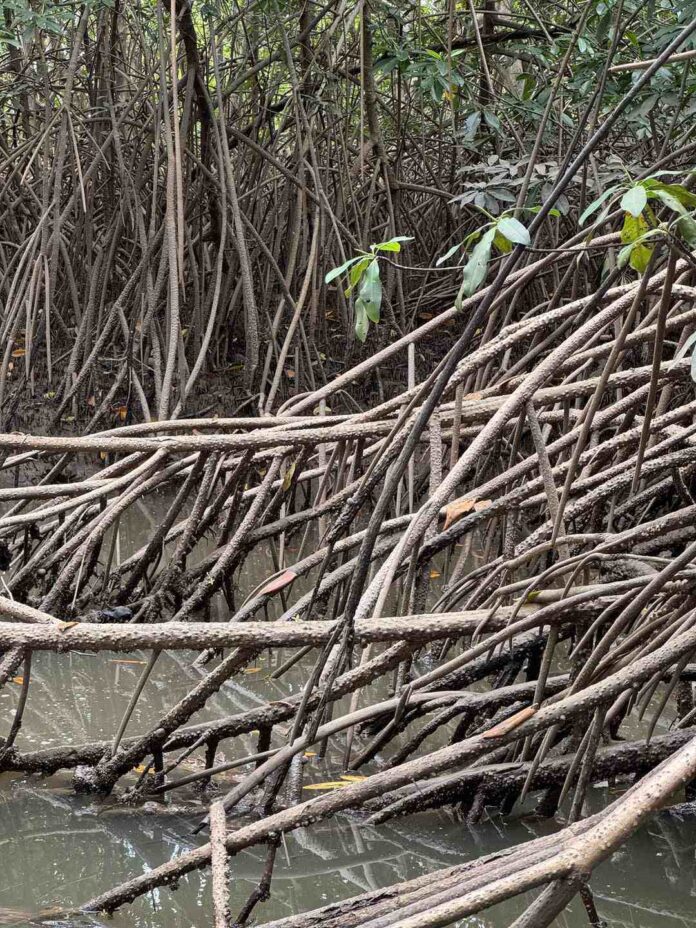
A dense and chaotic tangle of mangrove roots and fallen branches fills the frame, creating a wild, impenetrable thicket along the edge of a murky waterway. The scene is dominated by a complex network of grayish-brown branches crisscrossing in every direction, some submerged in the shallow, greenish-brown water while others form a thick barrier above it. Scattered green leaves and small patches of vegetation peek through the dense wood, adding to the lush but tangled atmosphere of this swampy environment.
At first glance, the image looks like nothing more than a natural, overgrown mangrove forest with no signs of animal life. The intricate pattern of branches and roots creates a confusing visual maze that makes it extremely difficult to distinguish anything unusual. However, something large and dangerous is cleverly camouflaged within this natural chaos.
Can you spot the hidden alligator?
Take your time and examine the entire photograph carefully. Let your eyes slowly scan across the dense web of branches, particularly focusing on the middle section where the roots and water meet. The alligator has used its exceptional camouflage to blend almost perfectly with the surrounding environment. Its rough, textured skin and dark coloration make it nearly invisible among the maze of mangrove roots and driftwood.
This is one of the more challenging hidden animal puzzles. The alligator’s body shape and color merge seamlessly with the tangled branches, creating a near-perfect optical illusion. Many viewers stare at the image for a long time without noticing the predator lurking in plain sight. Is it submerged in the water? Is it lying on top of the branches? Or is it positioned somewhere in between?
The dense network of roots and sticks plays tricks on your eyes, making it hard to separate the living creature from the dead wood. Look for unnatural shapes or a long, continuous form that doesn’t quite match the pattern of the surrounding branches. The alligator is remaining perfectly still, relying on its natural stealth to stay hidden.
The longer you look, the more the scene seems to blend together — until that satisfying “aha” moment when the hidden reptile finally reveals itself.
Answer: Location of the Hidden Alligator
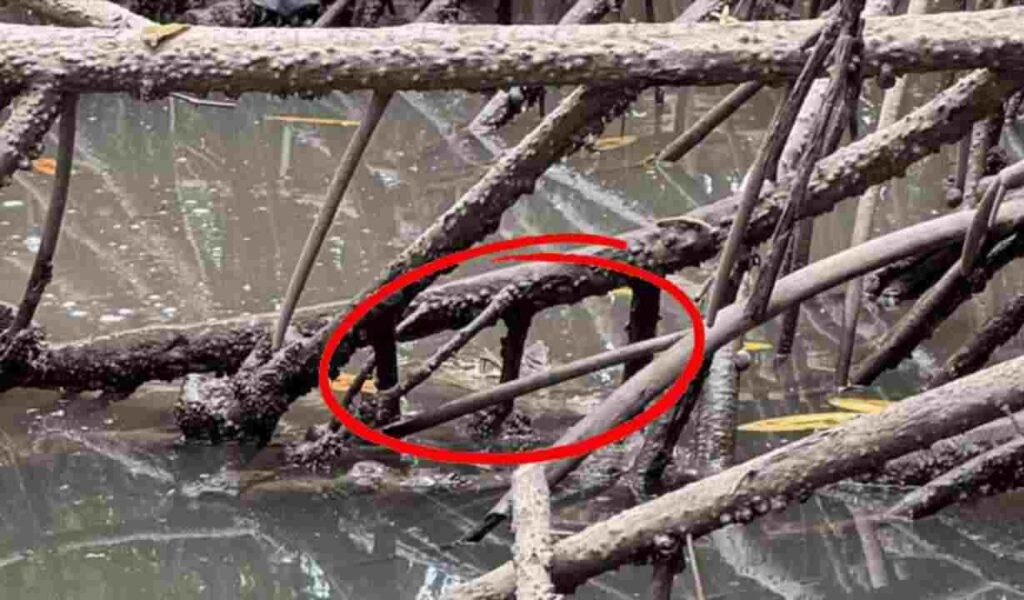
The hidden alligator is located in the middle of the picture, partially hidden behind the dense branches.
Its long, dark body is lying low in the water, cleverly camouflaged among the tangle of mangrove roots and sticks. Only a portion of its back and head area is visible, blending almost perfectly with the surrounding wood and murky water. Once you spot it, the distinctive shape and scaly texture become clear as it rests motionless in the heart of the swamp.
Did you manage to find the hidden alligator? Let us know in the comments how long it took you!
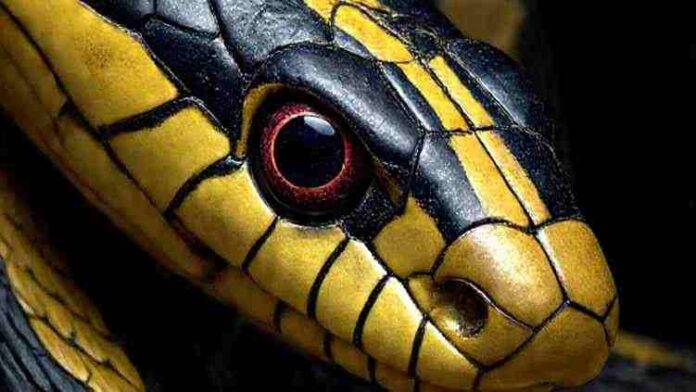
Yellow snake with black stripes: Have you spotted something and are trying to identify it? If something is unknown to you and you’re trying to identify what it is, you must keep in mind the features you observed in your first encounter, especially regarding its physical appearance. Physical appearance means the color, body shape, and any special patterns or spots, such as those found on a black and yellow (stips, lines, dots, spots, scattered mixed colour). These are common features to remember when spotting any snake around you. Here, we are specifically talking about black and yellow striped snakes. In general terms, we can describe it as a yellow snake with black stripes or even a snake with yellow and black stripes.
There are around 3,000 species of snakes found all over the world, except in Antarctica and a few special places. Almost every region is a habitat for these reptiles. Snakes can vary in color, shape, and size, and they are classified into two main categories: venomous and non-venomous. The venomous category has poison glands in their mouths capable of killing any living being, even a young elephant. That’s why we can say venomous snakes are capable of taking down any enemy. On the other hand, non-venomous snakes have venom glands, but the effect of their venom is mild. While small species may die from non-venomous bites, larger species like humans cannot die from them, except in rare cases. Non-venomous bites may cause mild effects, such as swollen skin or headaches.
How to identify a yellow snake with black stripes?
There are a few things you should keep in mind. By identifying these patterns and the data provided here, you can match what you’ve seen to the details given. The common name may vary in different places, but the scientific name remains the same all over the world for the same species. If the snake you saw matches the picture but has a different local name, this could be due to geographical differences. However, the scientific name is universal.
Keep in mind the following things:
Color – What was the color of the snake you saw?
Size – Was the snake smaller or larger?
Shape – Was the shape cylindrical or did it have any flat surfaces?
Special pattern – Most species do not have a uniform color. They often have different patterns on their bodies, such as circles, spots, scattered stripes, lines, or small patches of different colors.
Yellow Snakes With Black Stripes
Here the snake with yellow and black color –
Banded krait
Banded krait – Yellow Snakes With Black Stripes
Scientific Name
Bungarus fasciatus
Color
Black and yellow crossbands
Found in
Indian Subcontinent, Southeast Asia, Southern China
Venom
Venomous, neurotoxic venom
Size
Up to 2.25 meters (7 ft 5 in)
The banded krait (Bungarus fasciatus) is easily identifiable by its distinct black and yellow crossbands that encircle its body. The banded krait is also known as the krait. It has a broad, depressed head with black eyes and yellow markings on its lips, chin, and throat. The snake’s body is cylindrical with a blunt tail and prominent vertebral scales creating a noticeable ridge down its back. The banded krait can grow up to 2.25 meters in length, making it the longest krait species. Its venomous bite contains neurotoxins, which are dangerous to humans, though the snake is generally timid. Bungarus fasciatus is found in India, Nepal, Bangladesh, Myanmar, Cambodia, Thailand, Laos, Vietnam, Southern China, Malaysia, Indonesia, and Singapore.
Key features: black and yellow bands, broad head, blunt tail, neurotoxic venom.
Eastern Ratsnake
Eastern Ratsnake – Yellow Snakes With Black Stripes
Scientific Name
Pantherophis alleghaniensis
Color
Variable: Black, Yellow, Gray, Orange, Tan
Found in
United States (Florida, Panhandle, Key Largo)
Venomous or Nonvenomous
Nonvenomous
Size
Up to 6 feet (1.8 meters)
The Eastern Ratsnake (Pantherophis alleghaniensis) is a non-venomous species found in the United States. It is commonly known as the Black Ratsnake, Chicken Snake, Pilot Black Snake, Yellow Ratsnake, and Gray Ratsnake. Its coloration varies: juveniles are gray with dark blotches, while adults in Florida may be yellow, orange, tan, or gray with four dark longitudinal stripes, sometimes retaining juvenile blotches. It inhabits pinelands, hardwood hammocks, swamps, marshes, and suburban areas where development overlaps with its habitat. The species is commonly found in Florida’s Panhandle and extends throughout the Florida peninsula to Key Largo.
Key features: variable coloration, four dark stripes in adults, non-venomous.
Boiga wallachi
Boiga wallachi – Yellow Snakes With Black Stripes
Credit -The Reptile Database
Scientific Name
Boiga wallachi
Common Name
Nicobar Cat Snake
Venomous or Nonvenomous
Mildly Venomous
Color
Yellowish-brown with black or dark brown uneven spots; bright yellow underside with small black spots
Found in
Southern Nicobar Group of Islands (Great Nicobar, Little Nicobar, Pilo Milo Islands)
Size
73.5–105.0 cm snout-to-vent length, total body length up to 131 cm (52 in)
Boiga wallachi, commonly known as the Nicobar Cat Snake, is a mildly venomous snake endemic to the Southern Nicobar Islands. It is yellowish-brown with black or dark brown uneven spots on the back and a bright yellow underside with small black spots. The head is marked with blackish or brown shields infused with dull yellow, and the lip scales are yellow. Juveniles are a uniform yellowish-brown. This snake is found near fresh-water bodies in forested areas, often seen coiled on rocks or small branches. It measures between 73.5–105 cm snout-to-vent length, with a total length of up to 131 cm.
Key features – The Boiga wallachi (Nicobar Cat Snake) is a mildly venomous, yellowish-brown snake with black spots, a bright yellow underside, and is endemic to the Southern Nicobar Islands, reaching a total length of up to 131 cm.
Red, Yellow, Brown, Green, Pink, and various combinations
Venomous or Nonvenomous
Venomous
Size
55–82 cm (22–32 in), females can grow longer than males
Found In
Southern Mexico, Central America, Colombia, Ecuador, and western Venezuela
Special Features
Eyelash-like scales, highly variable in color, small and agile
The Yellow Viper (Bothriechis schlegelii), also known as the highland eyelash-pitviper, is a venomous pit viper species found in Latin America, ranging from Mexico to Colombia and Venezuela. It exhibits a wide variety of colors, including red, yellow, brown, green, and even pink. This small pit viper typically measures 55–82 cm in length, with females being larger than males. It is commonly referred to by several names, including eyelash viper, Schlegel’s viper, and in Spanish, bocaracá or oropel for its golden morph.
Key features – The Bothriechis schlegelii (Yellow Viper) is a venomous pit viper found in Latin America, notable for its eyelash-like scales, wide range of colors (red, yellow, brown, green, pink), and small size, with adults measuring 55–82 cm.
Yellow tree python
Yellow tree python – Yellow Snakes With Black Stripes
Scientific Name
Morelia viridis
Color
Hatchlings are lemon-yellow with stripes/spots; adults change to green, yellow, or red
Found In
New Guinea, some islands in Indonesia, and Cape York Peninsula, Australia
Venomous/Non-Venomous
Non-venomous
Size
Reaches up to 2 meters (6.6 feet) in length, 1.6 kg (3.5 lbs) in weight
The Yellow Tree Python (Morelia viridis) is a non-venomous snake that can grow up to 5–6 feet in length. Hatchlings are lemon-yellow with broken stripes and spots of purple and brown, or sometimes golden or orange-red. For yellow individuals at Iron Range National Park in Australia, the color changes over 5–10 days as they grow to around 58–60 cm long. Adults can reach up to 2 meters (6.6 ft) in length and weigh around 1.6 kg (3.5 lb), with females generally being larger. They are found in New Guinea, some Indonesian islands, and Cape York Peninsula in Australia.
Key features – The Yellow Tree Python is a non-venomous snake, reaching up to 2 meters in length, with lemon-yellow hatchlings and a habitat in New Guinea, Indonesia, and northern Australia.
Mangorova Snake
Mangorova Snake – Yellow Snakes With Black Stripes
Scientific Name
Boiga dendrophila
Common Name
Mangrove Snake, Gold-ringed Cat Snake
Color
Black with yellow or gold rings
Found in
Southeast Asia, including Cambodia, Indonesia, Brunei, Malaysia, Myanmar, Philippines, Singapore, Thailand, Vietnam
Venomous or Non-venomous
Mildly venomous (rear-fanged)
Size
8–9 feet (2.4–2.7 meters)
Habitat
Lowland rainforests, occasionally found in mangrove swamps
The Boiga dendrophila, commonly known as the mangrove snake or gold-ringed cat snake, is a mildly venomous, rear-fanged snake belonging to the family Colubridae. Endemic to Southeast Asia, it is one of the largest cat snakes, reaching lengths of 8–9 feet (2.4–2.7 m). Despite moderate envenomations causing swelling, no fatalities have been reported. It is found across Cambodia, Indonesia, Malaysia, Myanmar, the Philippines, and more. Although its name suggests an association with mangrove swamps, it primarily inhabits lowland rainforests.
Key features – Boiga dendrophila is a mildly venomous cat snake, growing up to 8-9 feet, and found in Southeast Asia’s lowland rainforests.
Morelia spilota cheynei
Morelia spilota cheynei – Yellow Snakes With Black Stripes
Scientific Name
Morelia spilota cheynei
Common Name
Jungle Carpet Python
Color
Black and yellow patterns
Size
5–7 feet, females larger than males
Found In
Queensland, Australia
Venomous or Non-venomous
Non-venomous
Morelia spilota cheynei, commonly known as the Jungle Carpet Python, is a python subspecies found in the rainforests of Queensland, Australia. It has a striking black and yellow color pattern, which helps it blend into the forest environment. This species is medium-sized, with adults typically measuring 5–7 feet in length, although females can grow over 8.5 feet. The vibrant black and yellow coloration makes it a popular snake for collections, especially lineages like the German Bloodline. Females are larger than males, as in most snake species.
Key features – The Jungle Carpet Python has vibrant black and yellow patterns, grows 5–7 feet, is found in Queensland rainforests, with females larger than males.
North-eastern Vine Snake
North-eastern Vine Snake – Yellow Snakes With Black Stripes
Scientific Name
Ahaetulla flavescens
Common Name
Yellow Vine Snake
Color
Green, cream-brown, yellow, grey with black and white patterns
Found in
Nepal, northeast Indian subcontinent, Myanmar
Venomous/Nonvenomous
Mildly venomous
Size
Up to 197 cm (6.5 ft)
The yellow vine snake (Ahaetulla flavescens) is a mildly venomous species known for its thin and elongated body, reaching lengths of up to 197 cm. This snake displays a variety of colors, including green, cream-brown, yellow, and grey, often featuring obliquely arranged black and white interscale patterns that are most visible when the snake is provoked. It is widely distributed across Nepal and the northeast region of the Indian subcontinent, extending into Myanmar.
Key features – The yellow vine snake (Ahaetulla flavescens) is a mildly venomous snake, reaching up to 197 cm in length, displaying colors like green, cream-brown, yellow, and grey, and is widely distributed from Nepal to the northeast region of the Indian subcontinent and Myanmar.
Most people know this fact that only mammals produce milk but this fact is half true because mammals have mammary glands to produce milk but others don’t have mammary glands to produce milk but some birds produce milk to feed their children like some birds. Crop milk doesn’t look like mammal’s milk but that is a type of milk.
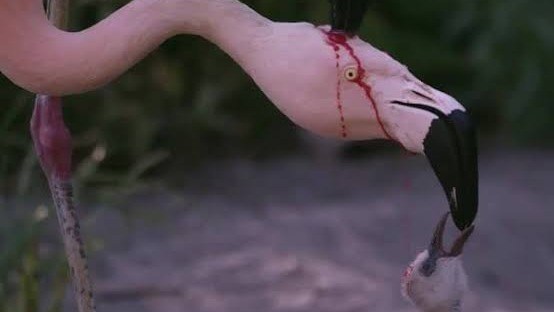
Crop milk is produced by mostly all Dove and Pigeon. This type of milk is also known as pigeon milk. Apart from pigeons and doves, flamingos, and the male emperor penguin also produces this type of milk. flamingos’ crop milk is a little bit weird because it is secreted from the head of flamingos and it looks like red blood. People who see it the first time will think this is blood and the bird which is producing red milk is injured.
5 Things to Know About Red Crop Milk
(1) What is Crop milk?
Crop milk is a secretion from the lining of the crop. The crop milk is semi-liquid milk that is produced by approx all pigeons and Doves. This milk is highly proteinous than normal milk it contains more amount of protein and fat than normal cow and human milk. The crop milk which is produced by pigeons and doves is known as pigeon milk. This crop milk contains anti-oxidants and immune-enhancing factors which is very helpful to health.
Milk production or secretion of crop milk is controlled by prolactin which is the same hormone that controls lactation in mammals. Like mammals babies, birds babies are also unable to digest normal food when they birth so their mother starts producing crop milk before a few days of hatching eggs.
Flamingos have a special type of crop milk that looks like red blood and is secreted from the head. Because of its red color people are also confused that this is blood and the bird is injured.
(2) Is Red Crop Milk Blood?
Flamingos produce red crop milk which looks like red blood but this isn’t blooded it’s a crop. It is produced from the digestive tract and is used to feed the chick. It isn’t made of hemoglobin so it is not blood.
(3) What is crop milk made of?
Crop milk is made of fat and protein. Crop milk contains a high amount of fat and proteins.
(4) What is flamingo red crop milk?
Flamingos are birds that produce milk to feed chicks. When chicks are very small they can not digest normal food so parents produce milk to feed chicks. Normal crop milk is yellow-colored or white-colored but flamingo produces red-colored milk which looks like blood. This red-colored milk is known as flamingo red crop milk.
(5) How is crop milk produced?
Crop milk production is a four-hour cycle in which proliferation of the crop germinal epithelium process occurs. This process results in the accumulation of the differentiated lipid and protein-containing cells and every 4-hour lactation process happens and this way crop milk is produced.
We all know about sheep and one specific thing about them — they tend to follow each other. If one sheep in front of a group walks in a particular direction, the entire flock follows the leader. This behavior helps ensure that no sheep are lost while grazing. However, this same instinct has also cost the lives of many sheep during predator attacks or accidents.
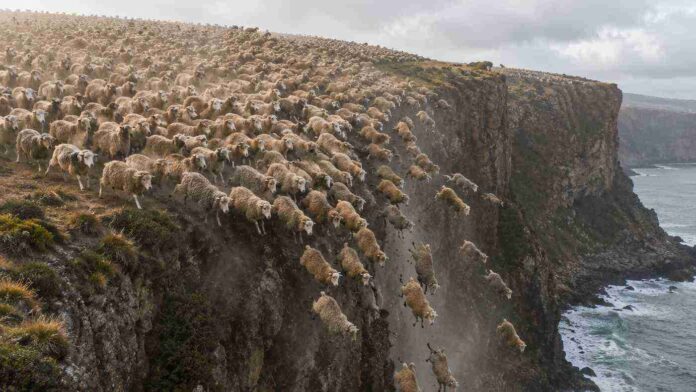
A similar incident occurred in Turkey, where more than 1500 sheep jumped off a cliff while following one another. In a village in Turkey, over 15000 sheep had gone out to graze on a hill about 15 meters above the ground. One sheep decided to jump off the cliff, landing safely on the stones below. According to reports, the first sheep survived the fall, but the rest of the flock blindly followed — leading to a massive tragedy as hundreds of sheep died after falling from the cliff.
This shocking incident took place in 2005, and local media covered it extensively. According to reports, the sheep from the entire village had gone grazing together in the hilly area. Following the first jumper, more than 15000 sheep leaped off the cliff. Sources revealed that around 400 sheep died instantly in the 15-meter fall — their bodies forming a cushion that saved the remaining 1,100 sheep. The incident happened in the eastern Van province of Turkey. Reports estimated that the villagers collectively lost sheep worth around £42,000.
This incident also teaches an important lesson — we should not follow others blindly. Sheep might not have the intelligence of humans, but they are social animals whose instinctive unity often keeps them together and prevents them from getting lost. However, this same herd mentality can lead to disasters like this one. Despite being an older incident, this tragic story is still discussed even in 2025, with many people on social media remarking how it symbolizes the danger of blind following.
This unbelievable news was also reported by BBC News.
If you want to chill watching crocodile movies, then we have a great list of crocodile movies for you. It will be so much fun watching these popular crocodile movies. We have picked some of the most popular crocodile movies from all over, and we have also created a voting poll in which people voted for 10 movies that they loved related to crocodiles.
Many of these crocodile films are really great because some are based on real-life incidents, which makes them even more thrilling to watch. It won’t feel like everything is just made up for a story; instead, you can relate to what could have happened if this story were a real-life crocodile attack incident. Watching movies based on true events is always exciting because these are not just mythical stories—something actually happened somewhere, and based on that incident, these movies were made. Definitely, you will love them.
The top five crocodile movies in this list are favorites of many people who love watching crocodile attack movies. We even posted on Facebook asking which crocodile-related movie people would love to watch, and based on their comments, we got some really popular picks. The top five from this list turned out to be favorites for many people, which shows how much they connected with them. That’s why these movies became loved by multiple audiences and ended up as their favorites.
We have also posted a list of 10 crocodile movies, and these are among the best suggestions people gave us. If you want to enjoy chilling with crocodile thrillers, these are must-watch. The monstrous crocodile creature in these films won’t ruin your fun; instead, you’ll really enjoy the thrill and excitement they bring.
It could also happen that you already know or have heard about many of the crocodile movies we’ve suggested. Still, since many of them are based on real-life crocodile incidents, it will be really fun to watch them again or discover them for the first time.
So, sit back, relax, and enjoy watching these best crocodile movies!
Top 10 Best Crocodile Movies You Must Watch for Thrills and Adventure
Here are some best movies you will love to watch
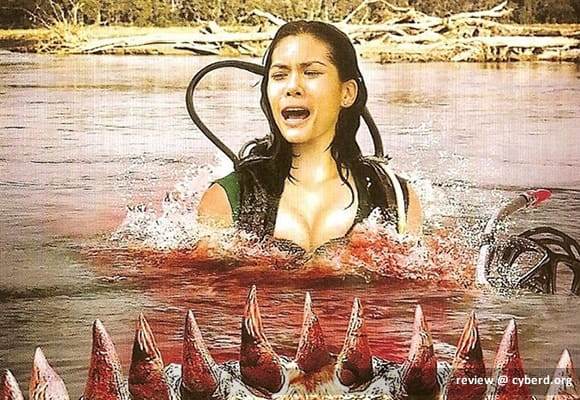
[1] Black Water (2007)
Black Water Movie
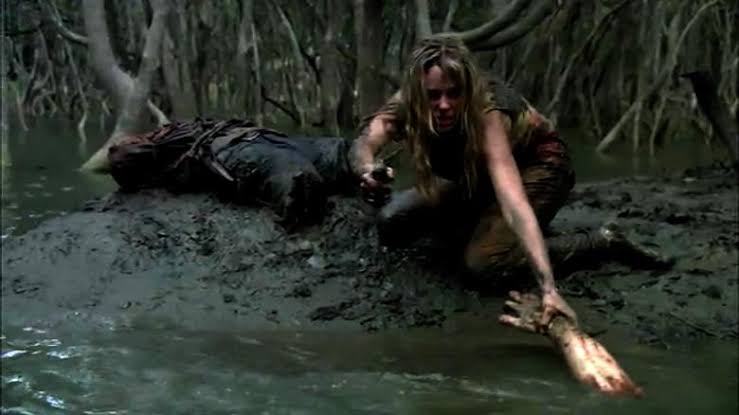
The first movie on our list is based on a real-life incident, which makes the excitement of watching this film even higher. This movie is inspired by a true event that happened in 2003, where people were horrified by a saltwater crocodile in Australia. Although this movie was released in 2007 and may feel a little older, the horror and thrill are still so intense that it remains a favorite of many people. Viewers have even voted it as one of their top crocodile movies.
Inspired by the true story of a crocodile attack in Australia’s Northern Territory in December 2003, the film tells the story of a pregnant woman, along with her boyfriend and her sister, who take a boat tour of a mangrove swamp, only to be terrorized by a ferocious saltwater crocodile. Black Water is a 2007 Australian-British horror film written and directed by Andrew Traucki and David Nerlich.
The main characters are Grace, her husband Adam, and Grace’s younger sister Lee, who decide to go on a vacation. During their trip, the crocodile suddenly attacks them, and they get trapped in a remote area where no one can help or even hear them. What started as a fun vacation quickly turns into a horrifying fight for survival. One of the group members is killed, and the terrifying situation leaves the survivors struggling to escape while the crocodile continues its hunt.
This movie delivers intense thrills, terrifying moments, and a chilling sense of realism, which makes it one of the best crocodile horror movies ever made.
[2] Lake Placid
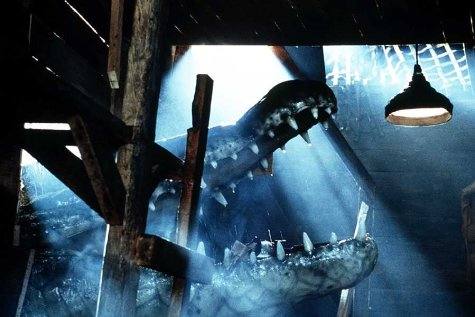
I was very confused while making the ranking for the list of 10 best crocodile movies you should watch. The problem was that every movie in this list is so thrilling, and people just love all of them. So, it was very hard to decide which movie should get a higher rank and which one should be lower. This ranking doesn’t mean that any movie is less thrilling than the others. Lake Placid is one of those thrilling and exciting films, full of horror and suspense.
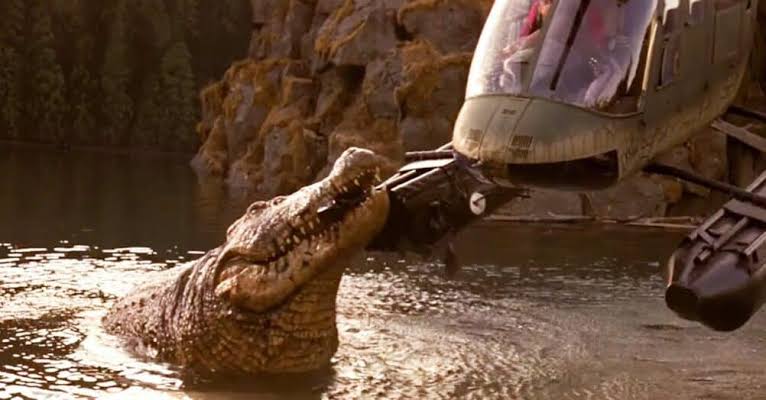
This American comedy-horror film was directed by Steve Miner and written by David E. Kelley. Released in 1999, this fictional movie tells the story of a group of police officers and scientists who discover an unknown creature in a peaceful rural area. Soon, they are attacked by the creature and suspect it to be a massive crocodile. Eventually, they realize it is an enormous crocodile, almost 32 feet long, which shocks everyone.
The group then decides to capture the giant crocodile. They plan a hunt, using a helicopter to bait the reptile so it can be tranquilized and captured. However, things don’t go as planned. The team loses control over the helicopter during the operation. Still, they somehow manage to shoot the tranquilizer at the crocodile. In the chaos, many people are injured while fighting the crocodile, and the entire plan changes. The group argues over whether they should kill the crocodile or capture it alive.
This film, though fictional, is packed with suspense, thrilling moments, and dark comedy, making it one of the most interesting crocodile movies ever created.
[3] Primeval
The most suggested crocodile movie I received was Primeval. Many people said this was their favorite movie because it is so thrilling and exciting to watch. This film is another one based on a real-life story.
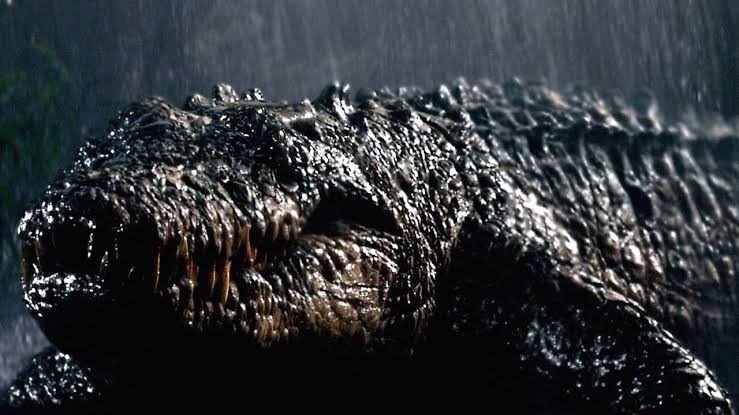
Primeval was released in 2007 and is inspired by a true incident involving a Nile crocodile, also known as the “Man-Eater.” This crocodile was reported to have killed hundreds of people over the years. To capture its story and make a documentary about this terrifying reptile, a team of American media personnel visited the region to learn more.
This was the same crocodile responsible for the death of a British forensic anthropologist who had been trying to study it. The crocodile, about 20 feet long, really existed in the Nile River in Burundi. Known as a man-eater, it had killed hundreds of people, making it one of the deadliest crocodiles in history.
In the movie, American news reporters travel to Burundi to document this terrifying beast, but the horrifying reality unfolds when they come face-to-face with the crocodile. The film highlights not only the danger of the predator but also the fear and chaos it created in real life.
This movie is gripping because it blends real-life horror with cinematic thrill. The fact that such a gigantic crocodile truly existed makes it even more frightening.
In Burundi, a British forensic anthropologist examines corpses in a mass grave, claiming they were all killed in the same manner—by this crocodile.
Primeval is a 2007 American action-adventure horror film directed by Michael Katleman and starring Dominic Purcell, Orlando Jones, and Brooke Langton.
[4] Rogue
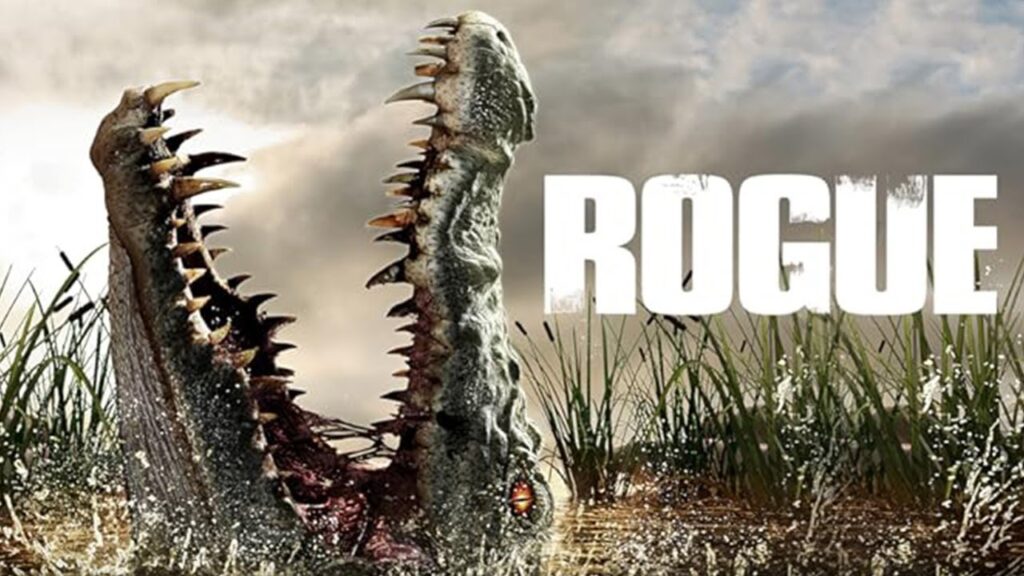
Rogue is a 2007 Australian horror film written and directed by Greg McLean. This is another movie in the list based on a real-life incident, inspired by events from the 1970s. The story was influenced by a crocodile named Sweetheart, a large saltwater male crocodile known for attacking boats, though no human attacks were ever recorded.
Based on this background, the film follows an American travel journalist, Pete McKell, who joins a small group of tourists on a crocodile-watching river cruise in Kakadu National Park, Northern Territory, Australia. The group is led by wildlife researcher Kate Ryan.
During the trip, they spot a flare in the distance. Deciding to follow it, they turn their boat towards the source. After hours of traveling, something massive passes beneath their boat, causing panic. Eventually, they arrive at a small island in the middle of the river, where they decide to stop and assess the situation.
Locals had already warned them not to linger after dark, but trouble begins here. A giant crocodile attacks the boat, killing one of the tourists. Fear spreads among the group as their fun trip turns into a terrifying fight for survival.
To escape, one man suggests swimming across and tying a rope to trees so they can create a makeshift zipline to safety without entering the water. However, the crocodile attacks again, forcing the group into a desperate battle against nature’s deadliest predator.
This chilling movie combines suspense and fear, making it one of the most gripping crocodile films. What makes Rogue even more fascinating is that it was inspired by real-life events surrounding the infamous crocodile Sweetheart.
[5] Crawl
Crawl is a 2019 American natural horror film directed by Alexandre Aja, who produced it along with Sam Raimi and Craig Flores. This movie is related to alligators, but I’ve included it in the category of crocodile movies because you’ll still enjoy the theme — crocodiles and alligators are quite similar.
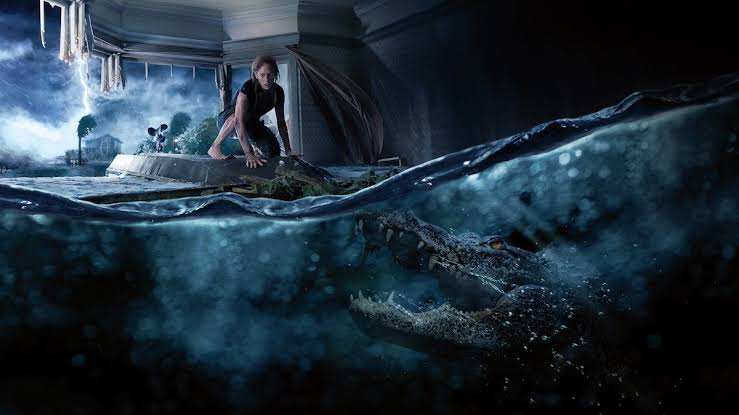
In this movie, we see that University of Florida swimmer Haley Keller receives a call from her sister Beth, advising her to leave the state due to the imminent arrival of a Category 5 hurricane. This hurricane causes alligators to come out of the lakes, and as we all know, Florida is famous for its alligators.
You may wonder why this movie is listed among crocodile movies, even though it features alligators. The reason is that both creatures share similar terrifying traits, and the film delivers the same kind of thrill and fear as any crocodile-based movie.
In the story, Haley’s family gets trapped inside their home during the storm. She discovers that her father has been attacked by an alligator and is severely injured. While trying to rescue him, Haley is also attacked and becomes trapped inside the flooded house. As the hurricane intensifies, the floodwaters rise across the city, and alligators spread everywhere, turning the entire area into a nightmare.
During the chaos, Haley spots three looters at a gas station and tries to attract their attention for help, but the alligators attack them too. The movie then turns into a desperate fight for survival, filled with tension, fear, and unexpected twists.
The title Crawl symbolizes the terrifying situation where alligators crawl everywhere in the flooded city after the hurricane. You will definitely enjoy this movie for its intense horror scenes, survival moments, and the terrifying presence of these massive reptiles.
[6] Blood Surf
Blood Surf is a 2000 horror film directed by James D.R. Hickox. It was officially released on June 26, 2001. This movie is also known by the name Krocodylus.
This is a horror movie where we see a group of people planning to shoot a documentary and perform an extreme adventure called blood surfing. For this thrilling activity, they choose a remote island.
When they arrive at the location, they first contact some local people who can guide them to an area where they can find sharks and attract them for the documentary. Their plan was to surf while surrounded by sharks, passing right through the middle of them to capture exciting footage.
At first, everything goes according to plan. The crew sets up on the ocean beach and begins surfing. But suddenly, something unexpected happens — a monstrous creature emerges from the water, dragging one of the people into the ocean and attacking them. Everyone becomes terrified.
The creature attacking them turns out to be a 31-foot saltwater crocodile, and the horrifying scenes that follow make this movie truly intense.
Although Blood Surf was released back in 2001, it remains a classic horror adventure film. You will definitely enjoy watching it, especially if you love giant crocodile horror movies full of suspense and thrilling moments.
[7] Croc
Croc is a 2007 American made-for-television natural horror film produced by RHI Entertainment.
The story of this movie begins when two featured men encounter a crocodile in a river, and the crocodile attacks and kills them both. This is how the story starts.
Jack McQuade runs a crocodile farm in Thailand with the help of his sister Allison and her son Theo. Jack owns the crocodile farm, and next to it, there is a resort owned by another man who dislikes Jack. The resort owner wants Jack to shut down his crocodile farm.
One day, Jack decides to release some of his crocodiles, but around the same time, the number of crocodile attacks in the area starts increasing. People in the town become terrified as the attacks continue, and a search team is formed to find out which crocodile is responsible for the killings.
Due to the interference of the resort owner, a few crocodiles escape from the farm. Jack decides to capture the monster crocodile that is killing people. During this mission, a crocodile escapes from Jack’s farm and is killed — but that turns out not to be the real killer.
The actual giant crocodile is still out there, continuing to attack people and spreading terror throughout the area.
[8] Dark Age
Dark Age is a 1987 horror adventure film directed by Arch Nicholson, produced by Antony I. Ginnane, and starring John Jarratt, Nikki Coghill, and Max Phipps.
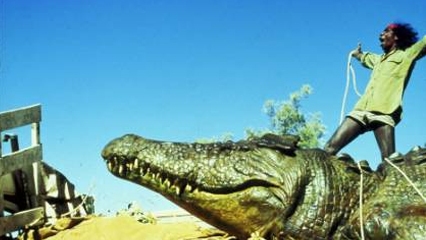
The story begins with a trio of poachers who walk into the river to capture a monstrous saltwater crocodile. While they are trying to find and catch the crocodile, they are suddenly attacked by the massive reptile, which is about 25 feet long. It kills two of the three men, leaving only one survivor — John Besser.
The next day, ranger and herpetologist Steve Harris (John Jarratt), along with Oondabund (Burnum Burnum), the leader of a local Aboriginal community, and his second-in-command Adjaral (David Gulpilil), head out to check on the poachers and rescue Besser.
However, the hunt for this monstrous creature doesn’t stop there. The crocodile keeps attacking people, and the number of crocodile attacks increases rapidly. The team becomes determined to kill the crocodile, leading to an intense battle between humans and the beast.
Although this is an old movie, released in 1987, it remains one of the great crocodile movies of its time. The connection of the crocodile in this film is related to a spiritual king, which adds a deeper layer to the story.
If you enjoy watching classic horror movies without too much unwanted VFX, then Dark Age is a great choice. It stands out as one of the best films in the crocodile movie category.
[9] Lake Placid 2
This is the second part of the Lake Placid series, and in this movie, we see a crocodile suddenly attack a group of researchers, dragging them into the river. The only things left behind are their hands and feet, as the rest of their bodies are eaten by the crocodile — a truly horrific sight.
Throughout the movie, we witness multiple crocodile attacks. A group of three friends goes hiking in the forest, enjoying their trip — until the crocodile appears and starts attacking them. The terror caused by this monstrous crocodile is horrifying, and it keeps launching brutal attacks on humans again and again.
In the entire movie, you will see how the crocodile terrorizes the whole locality, attacking anyone who enters its territory. This film was made after the success of the first Lake Placid, and it serves as the second part of the series.
People loved this movie for its intense horror and thrilling moments. Just when you think everything is calming down, a sudden turning point comes — and out of nowhere, the giant crocodile emerges from the water and attacks again.
You will definitely enjoy watching this movie if you love thrilling crocodile horror films filled with suspense, fear, and unexpected twists.
[10] Alligator
Alligator is a 1980 American independent horror film directed by Lewis Teague and written by John Sayles. This is one of the oldest horror movies on the list, and although it’s not exactly a crocodile movie, it deserves a place here. The story revolves around an alligator, not a crocodile.
In this list, we have seen multiple movies featuring crocodiles or alligators, but in this one, we see only a single monstrous alligator, which alone is enough to bring terror.
The movie begins in 1968, when a family from Chicago goes to Florida for a trip. During the trip, a young girl buys a baby alligator and names it Ramon. When they return home, her father—who dislikes animals—flushes the baby alligator down the toilet. However, the baby alligator somehow survives in the sewer system.
In the underground area, the alligator feeds on waste dumped into the sewers. Among this waste are biochemicals, fertilizers, and experimental chemicals used in scientific projects. These experiments were meant to improve the growth of vegetables and increase meat production. Although the project was partially successful, it was later stopped, and the leftover materials were dumped into the sewage.
Feeding on this chemical waste for years, the alligator mutates into a giant 36-foot monster. When this monstrous creature finally escapes from the sewer, real terror begins in the city.
This movie stands out as a great alligator horror film. I placed it at the 10th rank only because it focuses on an alligator instead of a crocodile. Still, it’s one of the most entertaining and thrilling movies for anyone who loves reptile-based horror films.
I know many people might criticize placing it at number ten, saying it deserves a higher rank—and honestly, they might be right. Alligator (1980) remains a fan-favorite creature movie, and you’ll definitely enjoy watching it. So, make sure to check it out.