
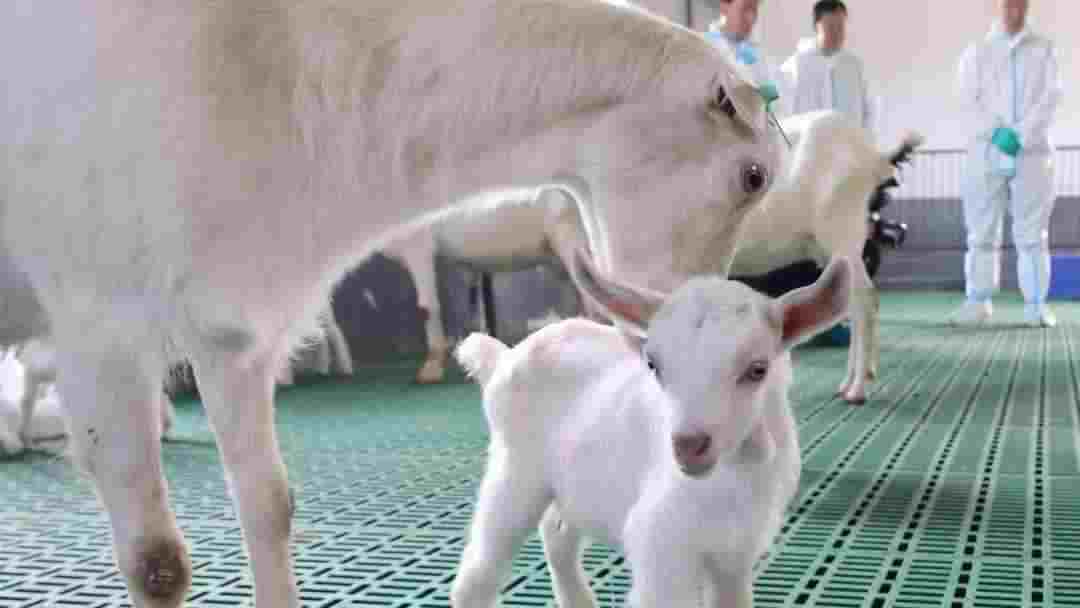
China invests a major portion of its funding in scientific research and technological development. The country has been working on gene cloning and genetic engineering for many years, and recently Chinese scientists achieved a significant breakthrough in the field of food production. Researchers successfully cloned goats with the aim of increasing dairy productivity and improving milk production.
According to Wang Xiaolong, the head of the research team, the cloned goats include four males and two females. This achievement is being considered an important milestone in the field of animal biotechnology and food science.
China’s 15th Five-Year Plan and Genetic Engineering Research
China’s 15th Five-Year Plan (2025–2030) has strongly focused on scientific innovation, biotechnology, and agricultural development. Under this plan, Chinese researchers achieved success in cloning high-yield dairy goats using somatic cell cloning technology.
The donor goats selected for the project were already known for their excellent milk productivity. These goats were capable of producing around 8 kilograms of milk per day and nearly 2,800 kilograms of milk annually. To improve dairy productivity further, scientists used somatic cell cloning techniques to reproduce the genetic characteristics of these highly productive animals.
As a result of the project, a total of six cloned goats were successfully developed from the high-yield pedigree breed known as the Saanen breed. The Saanen goat is globally recognized for its exceptional milk production capacity and is widely considered one of the best dairy goat breeds in the world. This research could become a major advancement in the field of food production and dairy farming.
Research Conducted at Northwest A&F University
The entire project was conducted at Northwest A&F University, where the research team successfully completed one of the most crucial phases of the experiment during the week of May 11 to May 15. Scientists involved in the project had been working on this research for a long time, and the successful cloning of the goats marked the result of years of effort and experimentation.
The university is well known for its contributions to goat dairy research and animal science. The region where the university is located contributes nearly 80% of China’s goat dairy production, making it one of the most important centers for dairy goat farming in the country.
This breakthrough is expected to help improve dairy production, especially in the goat milk industry. China is likely to continue investing heavily in this field because somatic cell cloning remains one of the most complex and challenging areas of genetic engineering.
How Somatic Cell Cloning Works
In genetic engineering, scientists generally focus on identifying and preserving the most desirable characteristics of an animal. In this project, Chinese scientists aimed to produce goats with higher milk productivity and better dairy performance.
To achieve this goal, researchers first selected the desired genetic traits from high-performing donor goats. They then used somatic cell cloning technology to reproduce these characteristics in cloned animals. The Saanen breed was specifically chosen because of its superior milk-producing ability.
The donor goats used in the experiment had excellent dairy productivity, producing nearly 2,800 kilograms of milk annually. Scientists considered this data highly valuable, and the genes from these goats were used in the cloning process. As a result, four male and two female goats were successfully cloned.
The process involved embryo placement and careful genetic engineering techniques to ensure successful development of the cloned animals. Scientists first selected the desired genes, carefully extracted the genetic material, and then used somatic cell technology to clone the targeted traits. This success represents a major advancement in dairy production and animal biotechnology.
Future of Cloning
Somatic cell cloning is not an easy process. Scientists have been researching this technology for decades. One of the most famous examples of animal cloning was Dolly, the world’s first cloned sheep. Dolly was successfully created in Scotland by scientists at the Roslin Institute near Edinburgh.
China’s recent achievement shows how far genetic engineering and cloning technology have advanced over the years. This initiative may help scientists discover even more possibilities in biotechnology, food production, and animal breeding. Experts believe that somatic cell cloning and genetic engineering could reach an even more advanced level in the coming years, opening new opportunities in agriculture and scientific research.