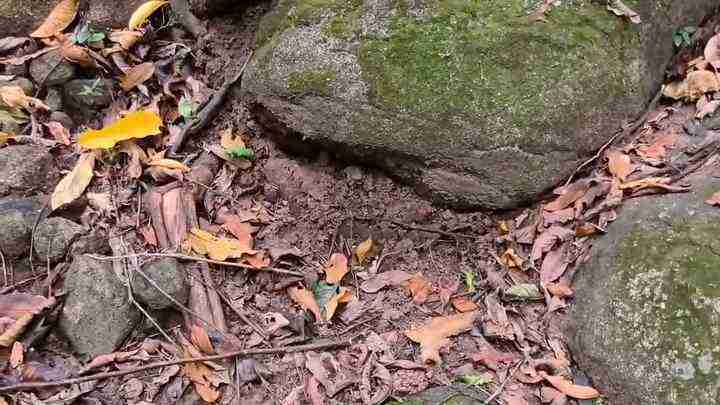
Carefully observe the image and try to locate the hidden snake camouflaged within the natural surroundings. Focus on patterns, textures, and subtle color differences among rocks, leaves, and soil. Avoid rushing—scan slowly and let your eyes adjust to the details before identifying anything unusual.
The image presents a quiet forest floor scene, rich with natural textures and earthy tones. At first glance, it appears to be nothing more than a cluster of moss-covered rocks scattered across uneven ground. The rocks vary in size and shape, some rounded while others are jagged, all partially covered in green moss that suggests a damp, shaded environment. Surrounding these rocks are dry leaves in shades of brown, orange, and yellow, along with thin twigs and small branches lying randomly across the ground.
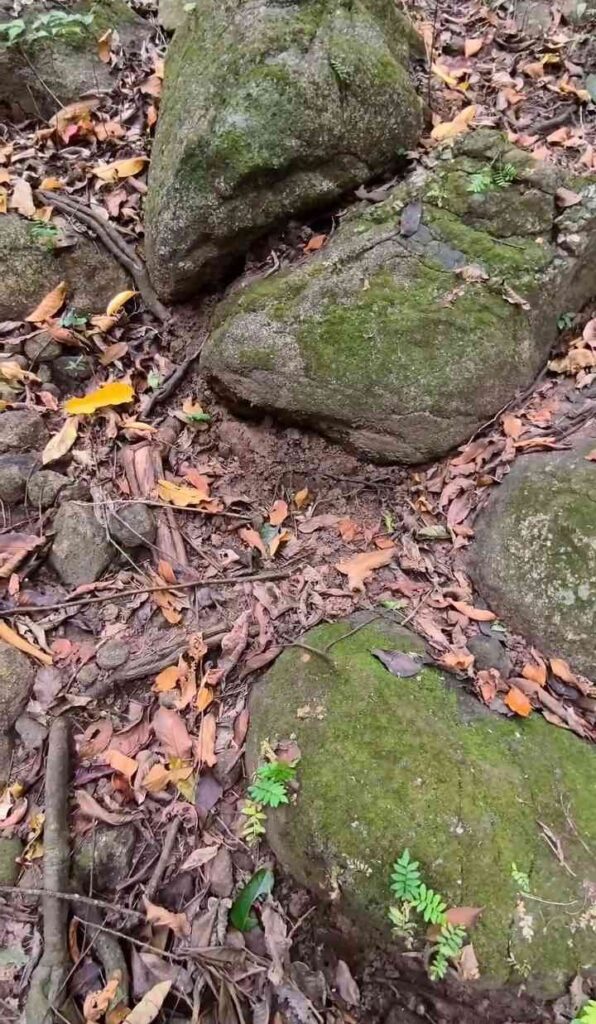
The composition creates a visually dense and slightly chaotic pattern. The interplay between the green moss and the brown forest debris forms a natural camouflage setting, making it extremely difficult to distinguish living creatures from inanimate objects. Small plants with delicate green leaves sprout between the rocks, adding another layer of detail that can easily distract the viewer’s attention.
Lighting in the image is soft and diffused, likely filtered through a forest canopy above. This reduces harsh shadows but also flattens contrasts, making it harder to detect depth and outlines. Such conditions are ideal for animals that rely on camouflage for survival, especially reptiles like snakes that often blend seamlessly into their environment.
As a zoology perspective, this is a classic example of natural camouflage, where a snake uses its coloration and stillness to avoid detection by predators and prey alike. The earthy browns, muted greens, and irregular patterns seen in the image mimic the typical skin patterns of many forest-dwelling snakes. This adaptation is not accidental—it is a result of evolutionary pressure that favors individuals who can remain unseen.
Viewers may initially focus on the larger rocks, assuming the snake might be coiled nearby. However, the real challenge lies in identifying subtle irregularities—perhaps a curved line that looks slightly too smooth, or a texture that doesn’t quite match the surrounding leaves and soil. The snake is not prominently visible; instead, it merges into the background so effectively that it becomes part of the landscape itself.
Patience is key. The more you observe, the more your brain begins to separate patterns from randomness. And once you finally spot it, the hidden figure becomes unmistakably clear.
Answer
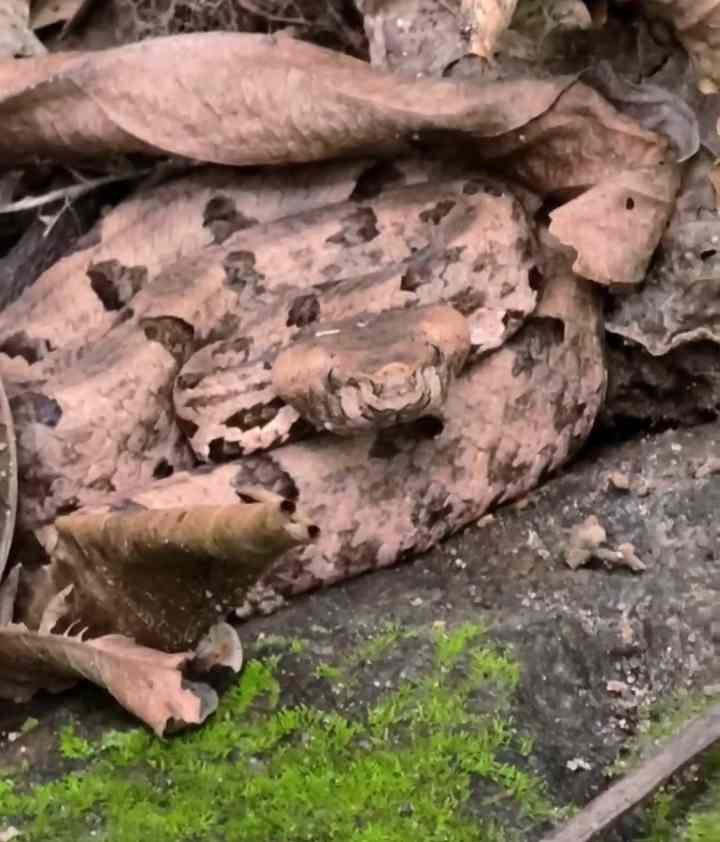
The hidden snake is located near the center of the image, slightly toward the lower middle area between the moss-covered rocks. It is partially stretched along the ground, blending perfectly with the dry leaves and soil. Look for a slender, curved shape that appears smoother than the surrounding debris. Its body follows a subtle line between the rocks, with coloration that closely matches the earthy tones around it. Once identified, you can distinguish the snake’s elongated form and natural camouflage, confirming its presence in the scene.