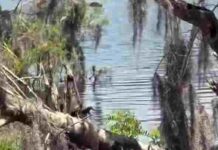
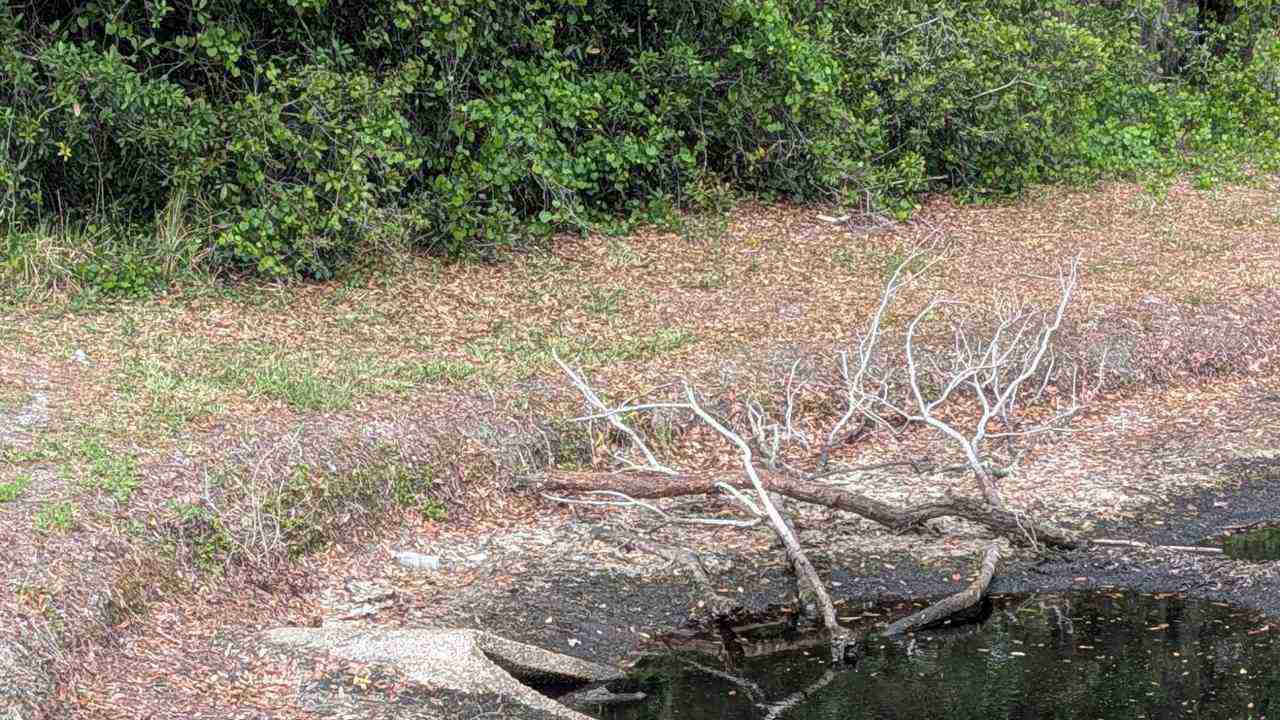
This captivating wildlife photograph presents a seemingly peaceful shoreline where land meets water in a natural, untamed setting. Dense green bushes and shrubs form a thick backdrop, while the foreground features dry brown leaves, patches of grass, and a fallen, pale white tree with twisted branches lying across the muddy bank. The dark, reflective water occupies the lower portion of the frame, creating a mirror-like surface dotted with floating debris. A concrete pipe-like structure is visible on the left side near the water’s edge, adding an element of human influence to this otherwise wild landscape.
At first glance, everything appears calm and ordinary — just another quiet moment in a coastal or wetland habitat. But there’s more to this image than meets the eye. Something dangerous is lurking here, perfectly camouflaged against its surroundings. Your challenge is simple yet thrilling: Find Hidden Crocodile in the Picture. Can you spot the stealthy predator before it spots you?
Find Hidden Crocodile in the Picture
The task requires careful observation and patience. Scan every detail — from the tangled branches of the fallen tree to the murky water and the textured bank. The environment provides excellent cover with its mix of shadows, earthy tones, and natural debris. Mangrove and wetland areas like this are known habitats for crocodiles, where they use their incredible camouflage skills to remain undetected while waiting for prey.
This image perfectly demonstrates nature’s mastery of disguise. The crocodile blends seamlessly with the dark water, mud, and shoreline elements. Many people miss it on their first few attempts, passing over the subtle shapes that don’t quite belong. Find Hidden Crocodile in the Picture and you’ll appreciate how these ancient reptiles have survived for millions of years through such effective stealth tactics.
Wetlands and riverbanks are vital ecosystems that support diverse wildlife. They act as nurseries for fish, feeding grounds for birds, and hunting territories for apex predators like crocodiles. In regions across India, Australia, and Southeast Asia, these habitats are essential yet increasingly threatened by human activity. Spotting wildlife in such photos not only entertains but also highlights the importance of conservation efforts to protect these fragile environments.
Answer: Find Hidden Crocodile in the Picture
The crocodile is at the left side of water where a concrete pipe like structure is made. A head is visible.
Once you locate it, the crocodile’s head emerges clearly from the camouflage — its eyes, snout, and upper head just breaking the water’s surface near the concrete structure on the left. The rest of its body remains submerged, making it a textbook example of ambush hunting. This discovery turns an ordinary-looking photo into an exciting wildlife moment.
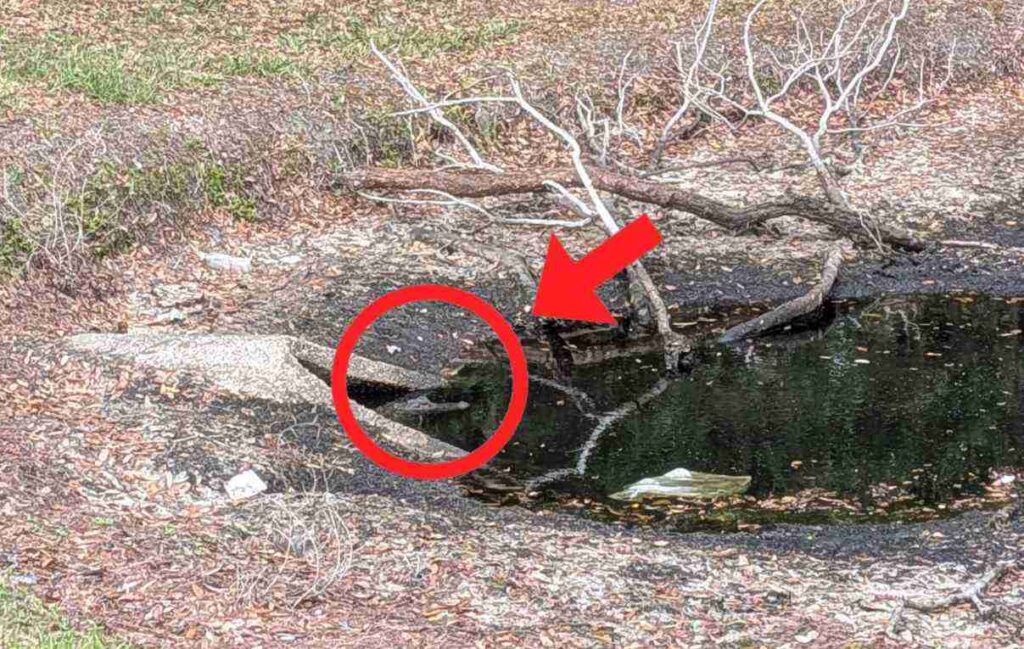
Find Hidden Crocodile in the Picture challenges not just your vision but your understanding of animal behavior. These reptiles can stay almost completely motionless, with only their nostrils and eyes above water. The concrete pipe-like structure provides additional context, showing how wildlife adapts even near human-made elements.
This type of visual puzzle is popular among nature lovers, photographers, and educators because it sharpens focus and awareness. Similar images from the Sundarbans, Florida Everglades, or Australian wetlands often go viral as people test their spotting skills.
Beyond entertainment, Find Hidden Crocodile in the Picture encourages respect for these powerful creatures and the ecosystems they inhabit. Preserving wetlands ensures the survival of crocodiles and countless other species that depend on these biodiverse zones.
Next time you’re near a water body or viewing nature photos, remember to look twice. The wild is full of hidden surprises, and mastering the art of observation can reveal wonders right in front of us.