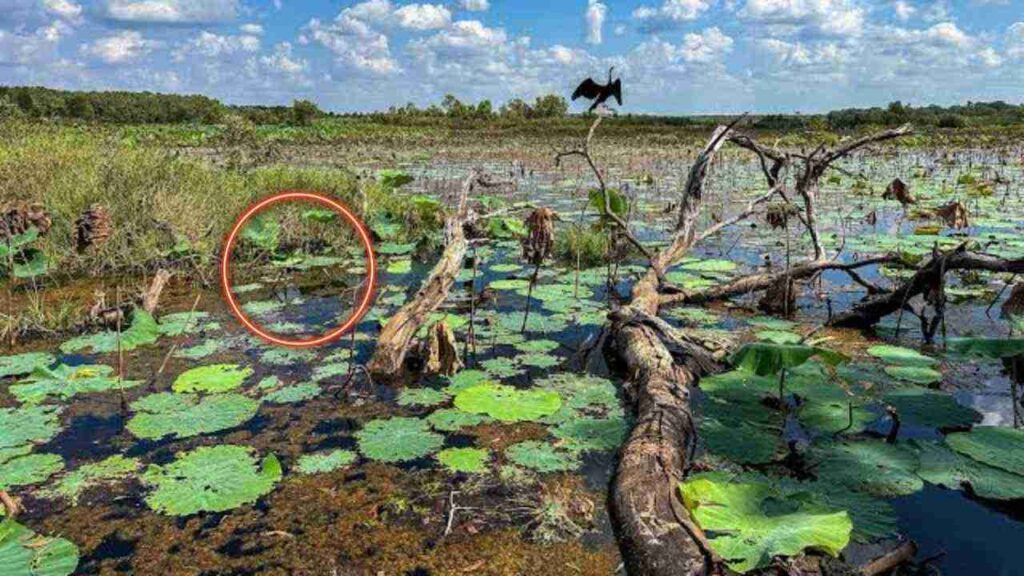
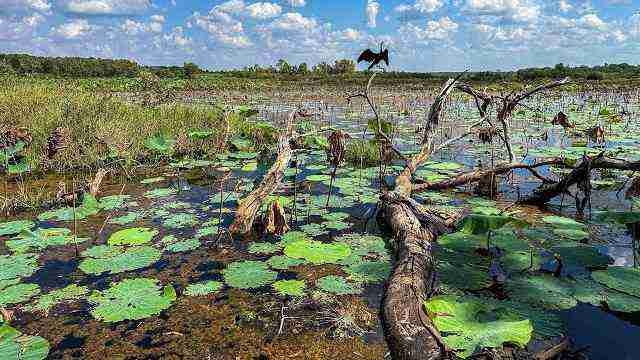
At first glance, this image looks like a peaceful wetland scene straight out of a nature documentary. Calm water spreads across the frame, dotted with vibrant green lily pads. Fallen tree logs lie scattered, partially submerged, while a lone bird perches confidently on a branch in the distance. The sky above is bright blue, decorated with soft white clouds, giving the entire scene a serene and undisturbed feeling.
But don’t let this calm atmosphere trick you.
Somewhere in this seemingly harmless landscape, a crocodile is hiding in plain sight—and spotting it is far more difficult than you might expect.
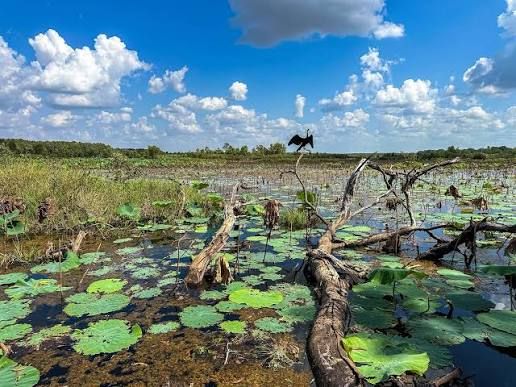
This image is a perfect example of natural camouflage, where a predator blends seamlessly into its surroundings. Crocodiles are masters of stealth, evolved over millions of years to remain undetected while waiting for prey. Their skin color, texture, and behavior allow them to merge perfectly with muddy water, submerged logs, and aquatic vegetation.
As you begin your search, your eyes may first wander toward the obvious elements—the bird sitting on the branch, the broken logs, or the bright green lily pads. These features naturally attract attention, distracting you from the real subject hidden below.
The key to solving this challenge is patience.
Focus on the water’s surface rather than the larger objects. Notice how the colors shift between dark brown and green. Look for shapes that seem slightly out of place—something smoother, more structured than the randomness of leaves and debris. The crocodile is not fully visible; instead, only a small part of its body breaks the surface.
This is what makes the image so fascinating.
Your brain is trained to recognize clear shapes and contrasts, but here, the crocodile defies that expectation. It stays still, relying entirely on its camouflage. Even experienced observers can miss it on the first attempt.
Take another look.
Slowly scan from left to right, then from top to bottom. Pay close attention to areas where water meets mud or vegetation. The hidden predator is closer than you think, silently waiting, almost invisible against the natural background.
And once you finally spot it, the illusion disappears—you’ll wonder how you missed something so perfectly hidden.
Answer
The crocodile is located slightly left of the center in the lower half of the image, hidden among the lily pads in the shallow water. Look carefully at the muddy area between the green leaves—there you will notice the head of the crocodile, with its long snout and eyes just above the water surface. Its body remains submerged, blending seamlessly with the dark water and surrounding vegetation, making it extremely difficult to detect at first glance.